The boy from Tajpur who broke cricket's clock.
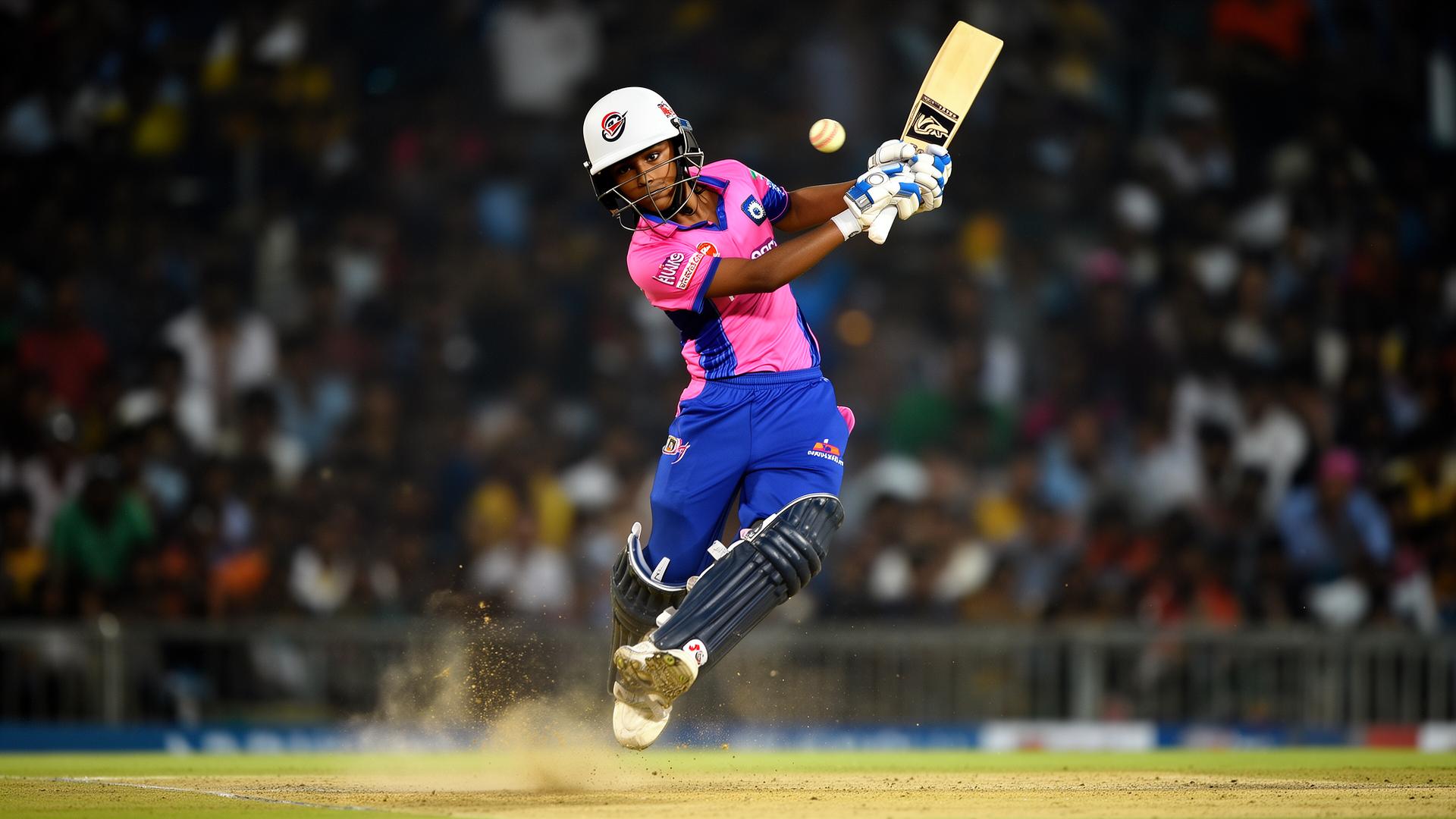
At an age when most children are negotiating with their parents about screen time, a fourteen-year-old from a Samastipur village walked into a floodlit stadium of forty thousand strangers, took guard against a Test-match bowler, and proceeded to play one of the most violent and unbothered innings the Indian Premier League has ever seen. The number on the scoreboard — 101 off 38 — is the headline. The real story sits underneath it. It is a story about a state that has failed its athletes for forty years, a father who refused to wait, and one boy who decided not to ask permission.
1. The pitch at Tajpur.
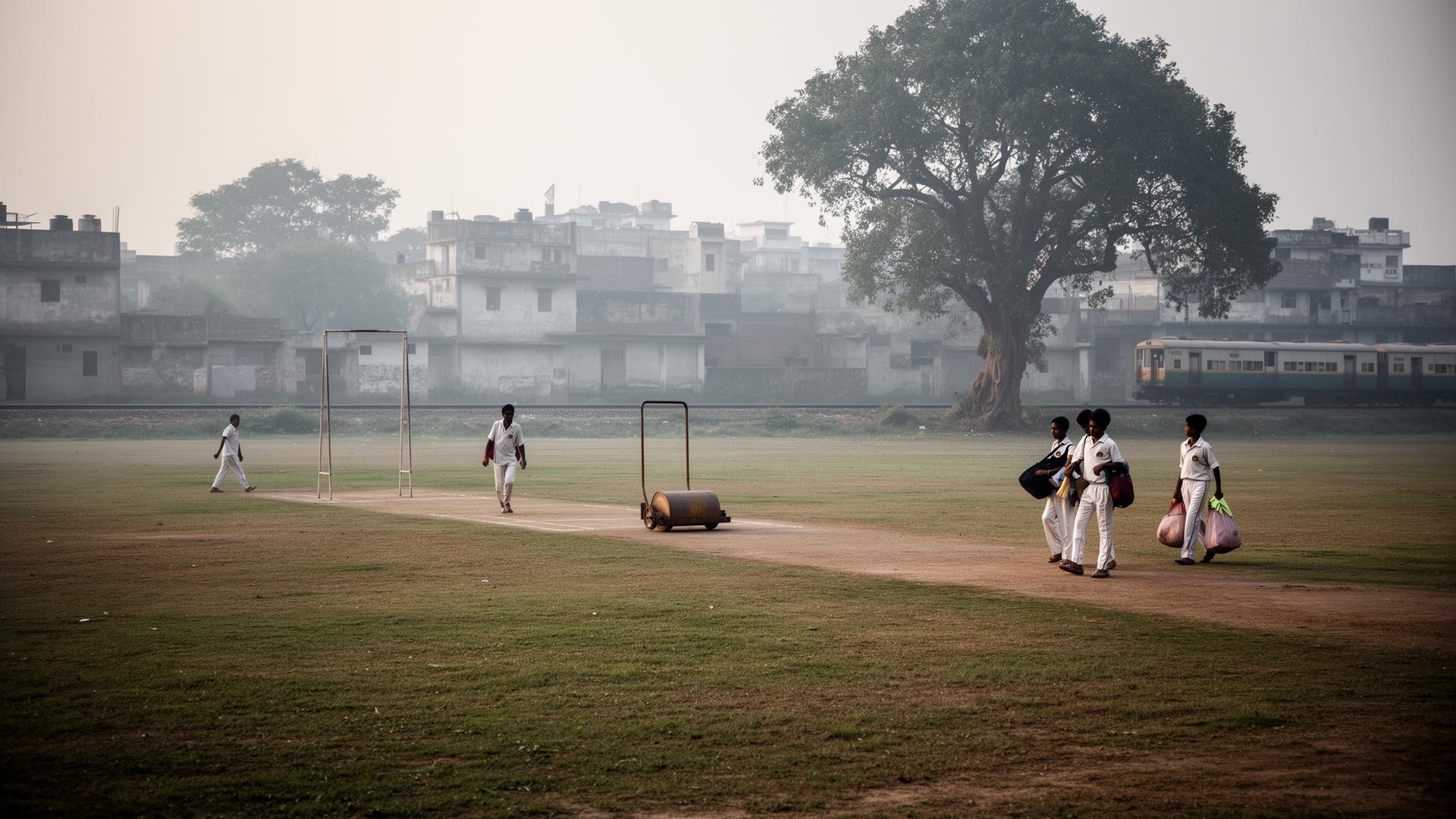
Tajpur is the kind of village you would miss if you blinked on the way from Samastipur to Darbhanga. A single market road, a sugarcane co-operative, a primary school with a tin roof, and a strip of beaten earth behind the old panchayat building that the local boys have, for at least three generations, insisted on calling a cricket ground. The pitch is a slab of clay rolled flat by a borrowed iron drum. In winter the dew makes the outfield a swamp; in summer the ball skids low off cracked earth and the fielders chase it through stubble. There is no boundary rope. There has never been a sight-screen. The nearest turf wicket of any quality is in Patna, four hours away by the rattling Sitamarhi–Danapur passenger.
This is the ground on which Vaibhav Suryavanshi, born 27 March 2011, learned to bat. He was four when his father first put a bat in his hands. By six, he was hitting tennis balls his older cousins bowled to him with a kind of contained fury that the village elders, sitting under the peepal tree by the bicycle stand, began to comment on. By eight he was opening for the under-fourteens at a local academy in Samastipur town, twenty-two kilometres away on the back of his father's motorcycle. By nine he was being driven the ninety minutes to Muzaffarpur because the bowling at Samastipur had stopped troubling him.
India is full of children who can hit a ball. What is rarer — and what everyone who has watched him bat for any length of time eventually says — is the stillness. Vaibhav does not flinch at the short ball. He does not premeditate. He watches it onto the bat with an expression that, were he forty years old and bald, you would call professional. He is fourteen.
2. A father's quiet wager.
Sanjeev Suryavanshi was once a club cricketer himself. Nothing serious — a middle-order bat for a Samastipur side that played in the district league — but serious enough to know what it was that he was looking at when his son began, one day, to consistently middle the ball. He runs a small farm. The family is not poor, but it is not the kind of family for which thirty thousand rupees a month of cricket expenses — the bus fares, the coaching fees, the kit, the protein supplements, the entry charges for tournaments in Patna and Ranchi — is anything other than a serious decision.
They made the decision. From the time Vaibhav was nine, his father drove him to the Manish Ojha academy in Samastipur six days a week, on a Hero Splendor with the kit-bag strapped between them and a tiffin of dal-roti in a plastic carrier. When the boy outgrew Samastipur, they began the longer haul to Patna. Sanjeev sold a small piece of family land near the village to keep the thing going. When local well-wishers offered to help, he refused most of them; he wanted his son not to grow up under any sort of obligation.
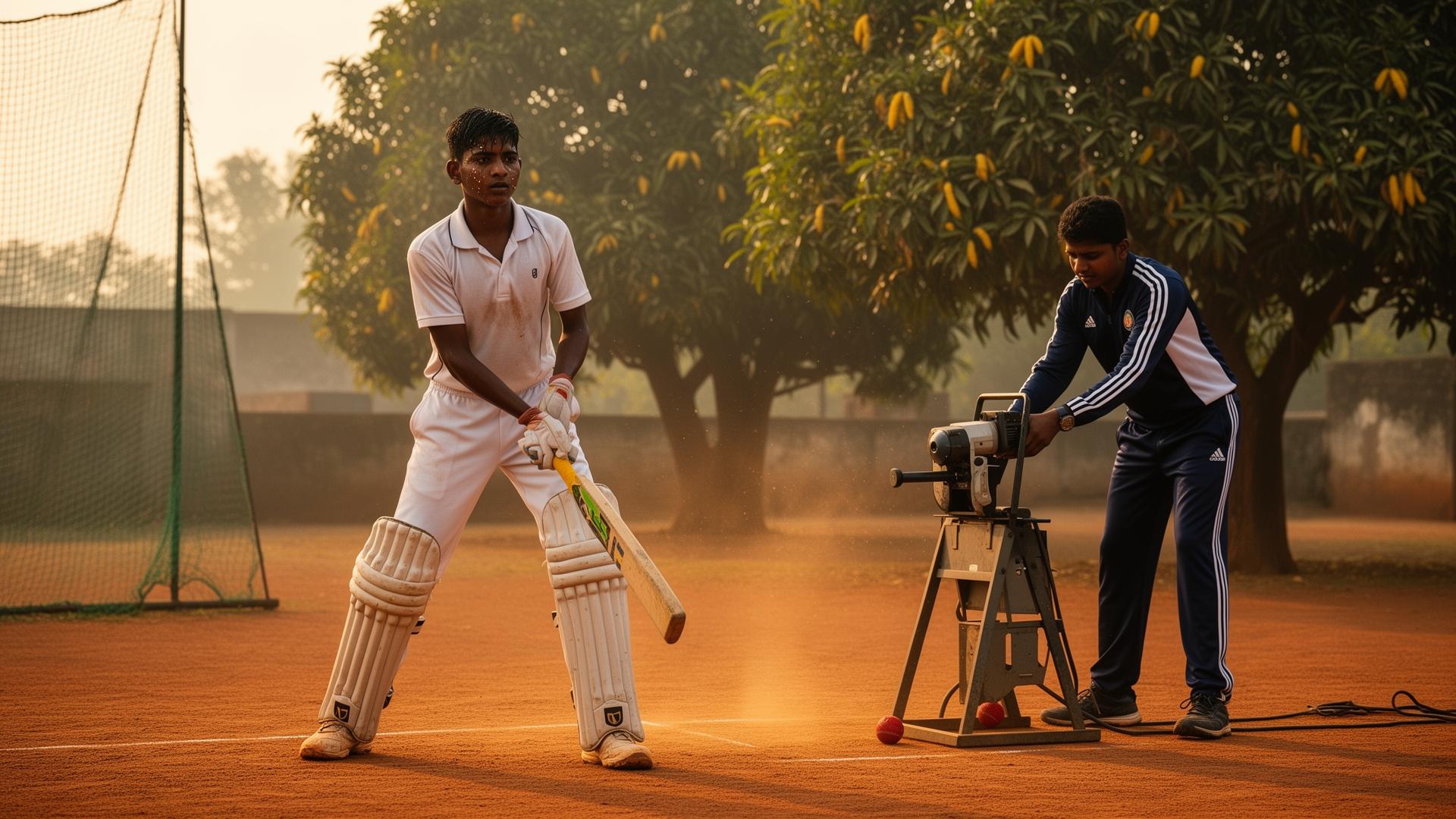
Manish Ojha, the coach who has shaped Vaibhav's technique since age nine, remembers the first session. "He was a small boy, very small, and he wanted to bat against the bowling machine at a senior setting. I refused. He waited until I went to take a phone call and then asked the assistant to set it to ninety. He played out three overs without missing one. He was eleven."
"I have coached for twenty-two years. I have not seen a boy with so little fear. He plays the fast bowler like the fast bowler owes him money."
3. The state that lost its team.
Here is where the story has to pause and tell the truth about the soil it grew in. For most of Vaibhav's life, Bihar did not have a Ranji Trophy team. In October 2000, when the state was bifurcated and Jharkhand was carved out, the Board of Control for Cricket in India recognised the Jharkhand State Cricket Association as the inheritor of the old Bihar set-up — including its first-class status, its stadiums, and its players. Bihar, the parent state, was left with no team. The Bihar Cricket Association, riven by court cases between rival factions, would not be re-recognised by the BCCI for another eighteen years.
Read that sentence again. Between 2000 and 2018, a state of roughly 120 million people — larger than every country in Europe except Russia — had no first-class cricket team. A child born in Bihar in 2001 who wanted to play Ranji Trophy had to migrate to Jharkhand, or Bengal, or Uttar Pradesh, and qualify by residence. The vast majority did not. Most simply stopped. A generation of cricketers — promising fast bowlers from Bhagalpur, opening batsmen from Muzaffarpur, leg-spinners from Gaya — folded their dreams and went into the army, the railways, or BPSC coaching. We will never know what was lost. We can guess.
When the BCCI finally re-recognised the BCA in September 2018 — under Supreme Court direction, and only after the Lodha Committee reforms made the inertia legally untenable — the inheritance was a state-level federation with no functional stadiums of its own, an A-Division club tournament that had not run to schedule in years, and a back-room cabinet of selectors who had spent the better part of two decades arguing in district courts. The Moin-ul-Haq stadium in Patna, once the venue of a 1996 World Cup match, was a ruin: the floodlights did not work, the outfield was used for political rallies, and the dressing rooms had been padlocked since 2007. As of 2025, Bihar's Ranji team plays the bulk of its home matches at borrowed venues in Patna and Moin-ul-Haq remains under a slow-moving renovation tendered in 2022.
Into this — not despite it, but somehow through it — Vaibhav Suryavanshi made his Ranji Trophy debut for Bihar in January 2024, age twelve years and nine months. He was the youngest first-class debutant in Indian cricket history. He scored a fifty in his second match.
4. The auction room.
The IPL 2025 mega-auction was held in Jeddah on 24 and 25 November 2024. By the time Vaibhav's name came up on the second day, the room had already been through the marquee Indians and most of the top-tier overseas batters. The base price was twenty lakhs. The expectation, even among those who had been tracking him through the U-19 Asia Cup and the Youth Test against Australia in Chennai — where he had hit 104 off 62 balls, the fastest hundred in Youth Test cricket — was that he would go in the thirty-to-fifty-lakh band. Possibly to a smaller franchise looking for an Indian uncapped player.
Rajasthan Royals opened at thirty. Delhi Capitals joined in. Within forty seconds the bid had cleared one crore. The hammer came down at ₹1.1 crore to Rajasthan. The room, by all accounts of those who were in it, went quiet for half a beat — the kind of pause auction rooms have when something a little unusual has just happened — and then resumed. In Tajpur, Sanjeev Suryavanshi was watching the auction on a phone in a relative's house. The boy himself, by his own later account, was asleep.
"We didn't buy a fourteen-year-old. We bought a batter we have been watching for two years. The number on his birth certificate is, frankly, the least interesting thing about him."
5. Thirty-eight balls.
His debut came on 19 April 2025 in Jaipur, against Lucknow Super Giants. He walked out at the top of the innings to face Shardul Thakur — a man who had taken a six-for in a Test match against England. The first delivery was a good-length ball outside off. Vaibhav stepped down and hit it, on the up, flat over long-off for six. The commentator's voice cracked. The boy did not even look up to watch it land. He simply tapped the wicket with his bat, marked his guard again, and waited for the next ball. He made 34 off 20. The Royals lost the game. He went home to the team hotel, video-called his parents, ate two parathas, and slept.
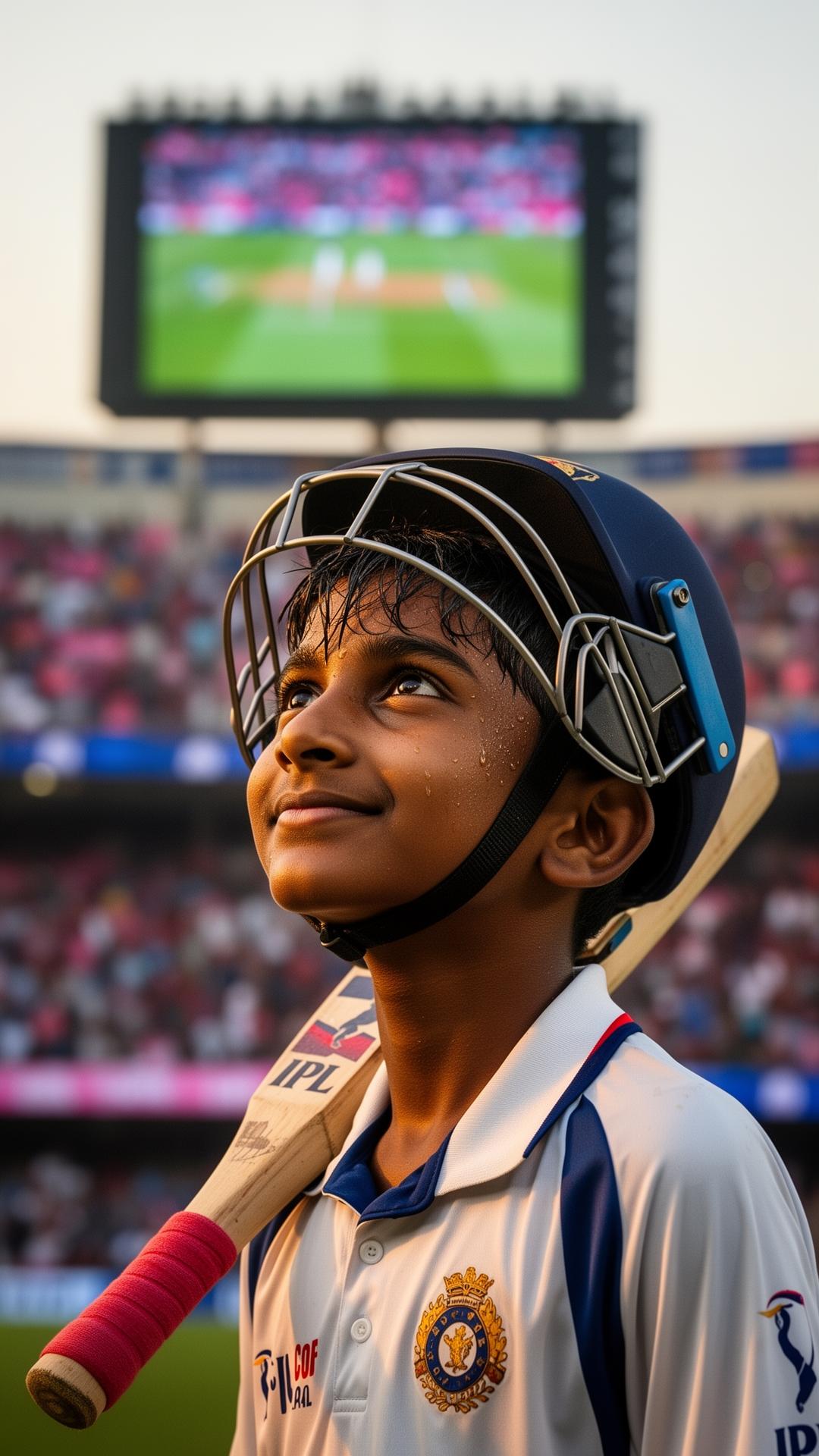
Nine days later, on the night of 28 April 2025 at the Sawai Mansingh Stadium against Gujarat Titans, he opened the innings again. Rashid Khan was bowling. Mohammed Siraj was bowling. Ishant Sharma, the old warhorse, was bowling. The first ball went over midwicket. The second was driven through cover. By the time he had faced thirty deliveries he was on 75. The crowd had stopped sitting down between balls. At the end of the eighth over, having reached his hundred off 35 balls — eleven sixes, seven fours, the second-fastest century in the history of the IPL and the fastest by any Indian batter ever — he removed his helmet, looked up at the giant screen where his mother and father, in a small living room in Tajpur, were being filmed on a borrowed phone, and bowed. Not waved. Bowed. Then he put the helmet back on, took guard, and prepared to face the next ball.
He was out on the next ball. 101 from 38. Caught in the deep going for a twelfth six. The standing ovation as he walked off lasted longer than the innings itself. Rashid Khan, who had been his old IPL friend's tormentor for six seasons, met him at the boundary edge and put a hand on his head.
6. What the legends saw.
Within ninety minutes of the dismissal, Sachin Tendulkar posted on X: "What an innings, Vaibhav. The way you played, with such calmness — you don't need any advice. Just stay yourself. The country is watching. The country is grateful." It was the warmest thing the most measured man in Indian cricket had said about a debutant in a decade.
Yuvraj Singh, who had once held the record for the fastest fifty in international cricket — twelve balls against England in 2007 — posted a single sentence: "Beta, this is just the start. Don't read too much, don't listen to too many. Just bat." Brian Lara, on commentary for an unrelated broadcast the following morning, was asked by a host for his reaction. Lara, the man who had scored 400 in a single Test innings, paused for a long time before answering.
"I have seen many young players. I saw Sachin at sixteen. I saw Brian himself at seventeen. What this boy has is not technique, although the technique is excellent. What he has is silence. He plays in silence. The bat speaks and he does not. At fourteen. It is — I will say it — frightening, in a good way. Bihar should be very proud. India should be very careful."
Ricky Ponting, then coaching Punjab Kings, told reporters at the next training session that he had been "shown the highlights three times and would happily watch them a fourth." Kevin Pietersen, never one for understatement, simply posted a video of the innings with the caption "Generational." Rahul Dravid, Rajasthan's head coach and a man whose praise has historically been audited by him in advance, said in the post-match press conference: "He has been with us in pre-season. The thing that struck me, and continues to strike me, is that he treats every ball as a separate problem. He does not carry the previous ball into the next one. That, you cannot coach. That is a way of thinking."
Sanju Samson, his captain, said only this: "He is a child. We will protect him like a child. And when he asks to play, we will let him play like a man."
7. The ghosts in the wings.
Now we come to the part of this story that is harder to write, and that the highlight reels will not show. For every Vaibhav, there are five hundred boys in Bihar — better at twelve than he was at twelve, or perhaps just as good — who did not make it. Not because they lacked talent. Because the system, for twenty years, did not exist for them to fall into.
There was a left-arm seamer in Bhagalpur in 2009 who, by every account from the silk-merchants who watched him bowl on Sundays at the Bhagalpur Club ground, was the quickest the eastern half of Bihar had produced in a generation. He bowled with the new ball at 138, swung it both ways, and was six-foot-three at nineteen. There was no Ranji team for him to play for. There was no district selection committee with the authority to put him forward. By 2013 he was a constable in the Bihar Police. By 2020 he had stopped going to the ground on Sundays. He is now thirty-five.
There was a leg-spinner in Gaya, named in a local newspaper in 2011 as "the next Anil Kumble," who took fourteen wickets in a single inter-school tournament and was photographed shaking hands with the visiting district magistrate. The district magistrate moved. The newspaper folded. The leg-spinner is, last anyone heard, running a small mobile-phone repair shop in Bodh Gaya. He has, when asked, said only that he does not follow cricket any more because it makes him sad in a way he cannot easily describe.
There was a wicketkeeper-batsman in Purnia who scored a triple-hundred in a CBSE schools final in 2014, was scouted by a Bengal club, attended one trial in Kolkata, was told he was very good but did not have the residence documentation to qualify under the Bengal quota, and went home. He is now an insurance agent. He still keeps wicket on Sundays in the school field across the road from his house. His son is six.
These are not anecdotes assembled for effect. These are three names from a longer list that any Patna sports journalist of a certain vintage can recite from memory. The bitterness in their voices, when they tell you these stories, is the kind that has been swallowed and re-swallowed for twenty years. They are not bitter about Vaibhav. They are, to a man, joyful about Vaibhav. They are bitter about what was done — and not done — to the boys who came before him.
And this is why his hundred at Jaipur matters beyond a scoreboard. It is the first time in a generation that an undeniable cricketing fact — a thing that cannot be argued with, that the whole country has just watched on television — has had a Bihar postcode on it. Every administrator, every selector, every state association that has, for two decades, treated Bihar as a problem to be deferred, is now in a different conversation. The boy did what advocacy could not.
"He hasn't just opened a door. He has shown that the door was never locked. Some of us were standing in front of it for twenty years, knocking, and we were the ones who needed to push."
8. What changes now.
Through the opening weeks of IPL 2026, Vaibhav has, by the standards he himself set last year, been steady rather than incendiary. A 67 off 41 against Mumbai Indians in the second game of the season. A 48 against Chennai. A measured 89 against Bengaluru that won Rajasthan the chase. He is fifteen now. He has begun to do what only the very best young batters do, which is to play within himself when the situation asks, and to detonate only when it pays. There is a patience to him this year that was not there last year. Rahul Dravid, asked about it after the Bengaluru game, said simply, "He's growing up. We are trying not to be in his way."
The interesting story, though, is no longer only him. It is what is happening behind him. In the eighteen months since his debut, the Bihar Cricket Association has been granted a fresh state allocation for stadium development; the long-stalled Moin-ul-Haq renovation has, finally, broken ground in earnest; the BCA has signed memoranda with three private academies in Patna, Muzaffarpur, and Bhagalpur to run residential under-fourteen programmes; and enrolment at district-level coaching camps across the state, by the BCA's own numbers, has risen by an estimated two-and-a-half times year on year. A fifteen-year-old boy from a Samastipur village has done in eighteen months what twenty years of administrative reform could not. He has made it embarrassing for the system to remain itself.
None of this is a fairytale. The next ten years will be hard. The next ten weeks could be hard. He will fail. The body of a fifteen-year-old will, at some point, complain. The country, which loves to crown and then to second- guess, will do both. The press will write columns about his school education, his shoulder loading, his shot selection. He will be compared, prematurely and unfairly, with people he has never met. Some of those comparisons he will not survive. Most of them, if his coaches and his father and his captain do their jobs, he will not even read.
But here is what the village elders under the peepal tree at Tajpur already understand, and what the rest of us are still catching up to. A fourteen-year- old from a state that had no cricket team for half his lifetime stood up in the largest sporting league in the country, looked an international bowler in the eye, and decided, on the basis of nothing more than the work he had put in, that he belonged. He did not ask. He did not wait. He did not apply for permission. He simply played. And in the playing, he handed back to two hundred million people in this part of the country a thing they had quietly stopped expecting to feel — the unembarrassed certainty that one of their own could be the best in the room.
Bihar has not won anything yet. Vaibhav has not won anything yet. The system has not been fixed. The grounds are still patchy. The selectors are still arguing. The boys in Bhagalpur and Gaya and Purnia are still waiting for facilities they were promised in 2018 and again in 2022 and again in 2025. We are not at the end of anything. We are, possibly, at the beginning. Which is, for a state that has been told for forty years that its beginnings are always somebody else's endings, the most subversive thing of all.
The boy from Tajpur did not just break the clock on the IPL century. He broke the clock on Bihar's cricketing self-pity. He is, against every actuarial prediction the establishment could have made about him, here. He is fifteen. He has not even started.